Reception dressing in India comes with more room to breathe than most other wedding functions. The ceremony has its own expectations, but the reception is where personal choice actually gets a say. That is also where the lehenga vs saree debate tends to surface, usually a few weeks before the wedding when the reality of standing in an outfit for six hours starts to feel relevant.
What Each Outfit Is
To define lehenga simply: a three-piece set of a flared skirt, a fitted blouse, and a dupatta. The skirt is stitched and structured, which means it stays in place and moves predictably through the evening. A saree is a single length of unstitched fabric draped over a petticoat and blouse. How well it stays depends entirely on how it is draped and pinned.
A lehenga saree for women that is pre-stitched or semi-stitched sits between the two in terms of practicality, giving the look of a saree with more of the ease of a stitched garment.
The Practical Angle
A reception runs long. Standing, greeting, moving between tables, posing for photographs, sitting back down, repeating all of it for several hours. The lehenga vs saree question is largely a stamina question when you look at it that way. A lehenga once worn stays put. The skirt does not shift, the blouse does not need adjusting, and a pinned dupatta holds through the evening without much thought.
Sarees require more active management. Georgette and satin drapes need checking regularly even with good pinning underneath. Brides who wear sarees often find this unremarkable. Those who rarely wear them tend to find a long function more tiring than expected.
Half Saree vs Lehenga
The half saree vs lehenga comparison comes up most often in South Indian wedding contexts, where the half saree is a traditional choice. The difference between lehenga and half saree lies in the drape and construction. A lehenga skirt tends to be more heavily embellished with a fitted waistband. The half saree sits differently, with the drape crossing the body and typically pinned at the shoulder.


The difference between lehenga and half saree also carries a cultural weight. Half sarees are important in a regional context and are associated with the celebrations of South India. Lehengas are more dominant at North and West Indian receptions. Both are appropriate depending on the family’s traditions.
Choosing a Lehenga Saree for Reception
A lehenga saree for reception needs to account for the length of the function and the venue. Outdoor receptions on uneven ground favour a lehenga since managing a saree pallu in that setting is genuinely difficult. Indoor venues with smooth flooring are more forgiving.
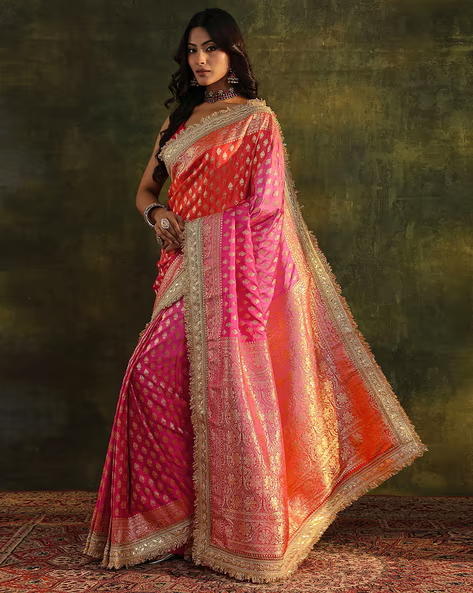


Lehenga saree for women in heavier fabrics like raw silk or velvet look strong for evening receptions but add significant weight over a long function. Lighter fabrics like georgette and net are easier to wear across several hours, though sarees in slippery versions of these need more careful pinning.
AJIO stocks a wide range of lehenga saree for reception options and lehenga saree for women across styles and fabrics for every reception setting.
To Wrap Up
AJIO has 2,000+ ethnic wear styles for women across lehengas, sarees, and pre-stitched lehenga saree for women picks from 70+ brands covering everything from traditional to contemporary reception dressing.
FAQs
- Which is easier to manage at a long reception, a saree or a lehenga?
A lehenga generally holds together better through a long function since it is stitched and does not need checking. Sarees in slippery fabrics like georgette need more attention, though brides who wear them often tend not to notice much difference.
- Will my family accept a pre-stitched lehenga saree if they traditionally prefer sarees?
Most do. The look reads as a saree and most families find it perfectly appropriate. It is also much easier on the bride across a full evening than managing a fully draped six-yard.